Meet Author Frank Hickey

Today I’m spending time with author and raconteur, Frank Hickey. To say his background is interesting would be a huge understatement. His adventures have taken him around the world, living outdoors or in crude huts, and learning the local languages and cultures.

Welcome, Frank, I know my readers are curious to hear about your interesting background. Please give us a taste of Frank Hickey, the man. When did you start writing, and how did you awaken your muse?

A wandering substitute teacher named Tash showed me that writing could be fun. I was twelve at the time and have been writing since.

When crime destroyed my ideal Brooklyn neighborhood, my family fled into the world of the Manhattan elite. The two different neighborhoods were worlds apart. One suffered soul-killing crime, the other had none. These contrasts woke the writer in me.

What has been your most rewarding experience during the writing process?

When locals come up to me in the neighborhood and say, “Frank, I like your book.” Nothing beats that.

Tell us about your books. Are they available in print and e-book?

My crime novels, “Funny Bunny Hunts The Horn Bug,” “The Gypsy Twist” and “Brownstone Kidnap Crackup,” are available in print through Pigtown Books. We plan to move to e-books soon.
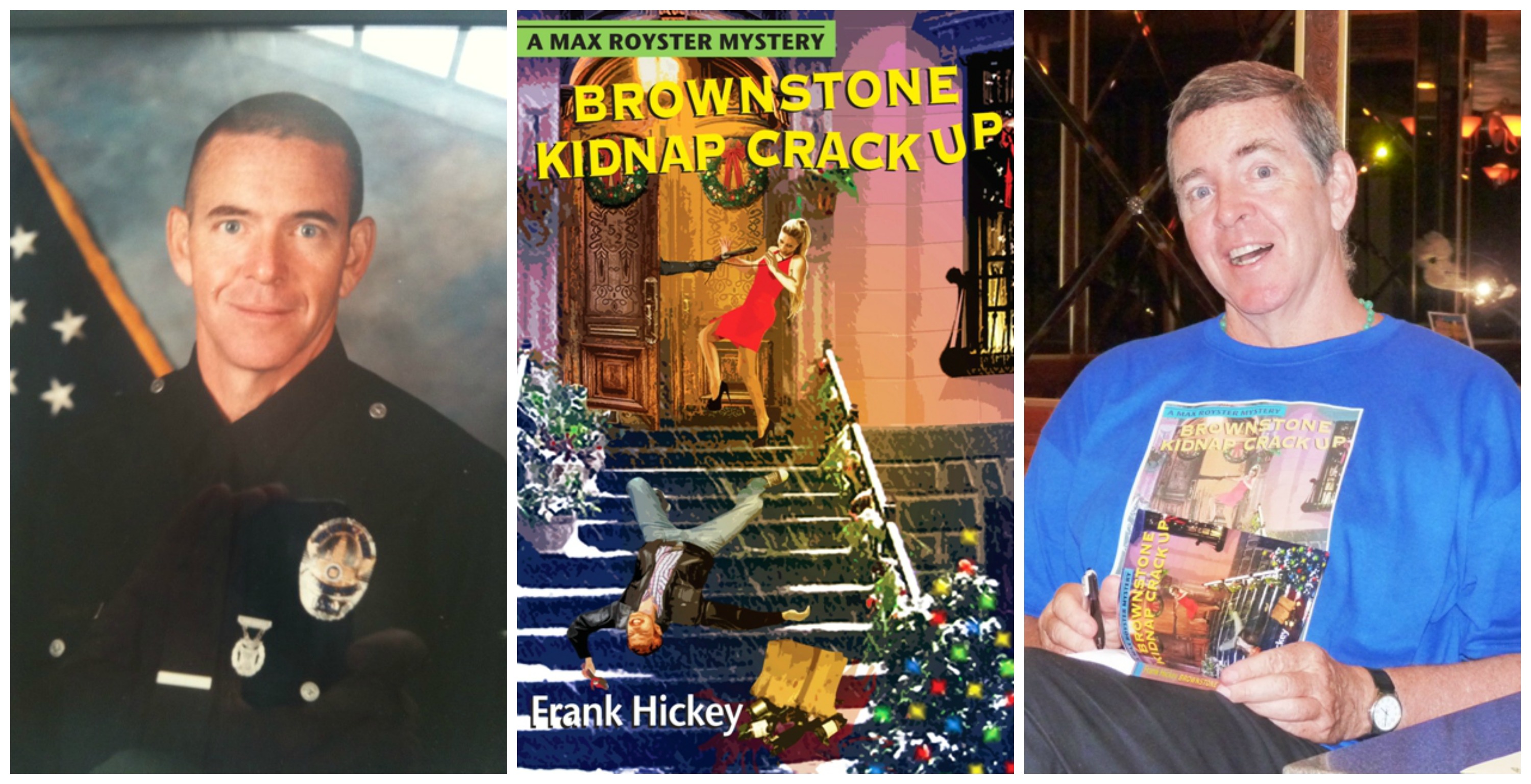
frank hickey collage                       

How does your environment/upbringing color your writing?

As I said before, Brooklyn’s Flatbush area contrasted with Manhattan’s Upper East Side. My upbringing straddled both. To me, Flatbush is still magical. All is possible there. The elitism in Manhattan’s Upper East Side continues. You can age and die there without ever growing up. That is why I nicknamed that area “The Playpen” in my books. The split between the two worlds echo in my stories.

My prep-school had expelled President John F. Kennedy in 1931. He and I shared the same Latin teacher almost forty years apart. I graduated from it and chose to flee the Playpen. Next came two years of working and living outdoors in Europe and North Africa. Back in New York, I became a private eye, specializing in murder defense cases. I then became a detective-investigator/police officer and later embraced police patrol in the inner cities of Savannah, Georgia, and Los Angeles.

Where and what is the perfect surrounding for you to write?

Sunny beach towns seem to work best for me. Rockaway, Nice, Venezia, El Salvador and Nicaragua coax forth the stories. The sea is our great clock.

What are your immediate writing goals?

Like all of us, I want to write scenes never written before. At the risk of hamming it up, I want to change lives with my stories.

Frank, suffice it to say your life is rich in experiences, and I’m convinced you have an untapped reservoir of stories waiting to be written. I love the name of your publisher, Pigtown Books. The title could not be any more apropos for its authors. Thank you for visiting with my readers; much success in your future writing endeavors!

Dialogue Tips

English: Exclamation Colon
English: Exclamation Colon (Photo credit: Wikipedia)

Dialogue Tips


  • Dialogue should do one of two things: move the plot along or reveal character
  • “Said” and “asked,” are better than the multitude of other dialogue tags such as responded, agreed, etc.
  • Better still, use the character’s action as a dialogue tag instead. “No way.” Dan pulled out his gun.
  • Or use description as a dialogue tag. Cynthia’s silk skirt swirled around her long legs. “Are you coming or not?”
  • Go easy on the exclamation points. If the dialogue is exclamatory enough, an exclamation point is unnecessary. An Exclamation point should never be used in narrative. Elmore Leonard said, “Use only one exclamation point in a novel.”
  • Don’t ever have a character tell someone something that they already know to get information across. Maybe it is something that ought to be in narrative, but be careful of an information dump.
  • Though you want dialogue to be realistic sounding, don’t copy how we really talk such as: “Hello, how are you.” “I’m fine, and you?” Leave all this greeting stuff and comments about the weather out (unless it’s important to the plot).
  • When writing, start a new paragraph every time a new person speaks or does something. This will help the reader follow what is going on.
  • Even if the conversation is between two people, put a dialogue tag in every so often so the reader knows who is talking.
  • Never have one person speak for long periods of time. When we’re talking to one another, we interrupt, change the subject, etc.
  • Be sure the reader knows where the dialogue takes place.
  • Lastly, beware of talking heads. We need to see the characters and what they are doing during the conversation. No one sits or stands perfectly still while talking, and this brings you back to the fact that you can use an action as a dialogue tag. “Phil scratched his head. “What do you expect me to do about it?”

Courtesy of Marilyn Meredith, author of the Rocky Bluff P.D. series, under the name F.M. Meredith, and the Deputy Tempe Crabtree series. http://fictionforyou.com


A Conversation With Author Bob Doerr

759c2910d58a0a7e9d9a4a_L__V196629725_SX200_

Please introduce yourself, and tell our readers when you began writing, etc.

Hi John, thanks for having me back on your blog. It was great seeing you again at the Public Safety Writers Association annual conference.

Prior to becoming a full time author, I spent nearly thirty years as a Special Agent in the Air Force in a small organization called the Air Force Office of Special Investigations and eight years as a financial advertiser. I had my first novel published at the end of 2009.  Since then I’ve had four more novels published along with one novella.  I’ve also had two short stories published in anthologies.

Do you write every day, and are novels the only things you write?

I write five or six days a week, usually in the morning for a few hours.  I would be happy writing seven days a week, but I usually have too many things on my “to do” list. While most of my writing is focused on novels, I do write short stories and other shorter works every now and then.The Enchanted Coin front cover

I know you are about to release a new novel. Please tell my readers about it.

Actually, my new book is a novella rather than a novel.  I wrote it with my granddaughter and expect it to be released by my publisher in August.  It’s titled The Enchanted Coin and targets Middle Grade readers, those young boys and girls who aren’t quite ready to get into the Young Adult books. The Enchanted Coin is a fantasy adventure story of a fourteen year old boy, Greg, who discovers a magical coin in a pond on his parents’ ranch. The coin is inscribed with a specific task that Greg feels he must fulfill. Once he does, he is shocked to find himself instantly transported to another world.  Once there, he is thrust into the middle of a dangerous adventure.

What other novels have you written?

I have five published novels.  They are all part of the Jim West mystery series.  The titles include: Dead Men Can Kill, Cold Winters Kill, Loose Ends Kill, Another Colorado Kill, and No One Else to Kill.  While Jim West is the protagonist in each of the books, the books are stand alone stories and can be read in any order.

What is your most rewarding writing experience?

I think my most rewarding experience as a writer is hearing from people who have read my stories and have taken the time to reach out and tell me how much they have enjoyed my books.  Thanks to this electronic era we live in, I have heard back from fans in Australia, Europe, India, Canada, as well as in the U.S.

Do you belong to any writing or critique groups?

I belong to a number of writers’ groups to include the Mystery Writers of America, the International Thriller Writers, Sisters in Crime, the Texas Writers League, the Military Writers Society of America, and the aforementioned Public Safety Writers Association.  I have belonged to smaller, local writers groups that do a lot of critiquing but I’m not active in any of those right now.

Are you working on any new projects?

I am glad you asked. I’m just now coming to the conclusion of a manuscript for a new stand alone international thriller.  It will be my first novel outside my Jim West series and is titled The Attack. In this story, I’ve created a character who belongs to a very small ultra secret U.S. agency. The agency, created in response to 9/11, is known to only a handful in government. The agency has the mission to seek out and eliminate individuals who have done deeds of extreme violence against the U.S. and are believed to be planning similar acts in the future. In The Attack, my protagonist is a “hunter” who is sent out after a terrorist who led a vicious attack against a U.S. airport and is suspected of planning a second, similar strike elsewhere in the country.  I expect this book to be out at the end of this year or early next year.

Is there anything you would like to share with our readers?

I was quite honored and thrilled recently when I discovered that I’ve been selected as one of the three finalists for the 2013 Author of the Year award by the Military Writers’ Society of America.  The winner will be announced later this year at the organization’s annual conference.

Please provide the readers with a link to your website, and a link to your book.

My website is www.bobdoerr.com and my books can be found on my Amazon page http://www.amazon.com/Bob-Doerr/e/B003M8OPB2/ref=sr_tc_2_0?qid=1374607852&sr=1-2-ent

Thanks again for this opportunity to visit with you and your followers.

Promoting Your Book

PSWA Member graphicLast week I attended the Public Safety Writers Association Conference. One of the presenters was Patricia Fry, a full-time writer, speaker, consultant, editor and the author of 39 books. Patricia spoke about author promotion, emphasizing that the role falls to the author, rather than the publisher. Here are some important points to consider about book promotion:

  1. No matter which publishing option you choose, it is up to the author to promote his/her book.
  2. Your book will sell for as long as you are willing to promote it.
  3. There are hundreds of ways to promote  your book and most of them are free, but many of them do take time, thought, effort, creativity and energy.
  4. In order to successfully promote your book, you MUST know who your audience is and where they are (what they read, where they buy books, etc.)
  5. Target your marketing efforts toward your target audience.
  6. When devising your marketing plan, remember to think, “exposure, exposure, exposure.”
  7. Experiment and discover which promotional effort is most effective for you and for your particular book. Do more of that activity!
  8. Don’t give up after one disappointing promotional activity–the next book festival (presentation, book signing, etc.) might be ultra successful.
  9. Be open to new promotional ideas, but  don’t spread yourself too thin. Keep to the basics that are working.
  10. Before launching out to speak, do a book signing, etc., put out a LOT of publicity. Use all of your social media accounts, newspapers, appropriate newsletters, posters, blogs, your email list, etc.
  11. Seek out unusual, but appropriate,venues for  presentations/signings/demonstrations and to place your books for sale. Choose locations where your audience congregates, shops, etc.
  12. For fiction–do home parties and let guests help act out a scene–bring costumes/props.

    This is just the tip of the iceberg. Use your imagination and get creative in planning your own marketing plan–always keeping your audience/readers in mind. Patricia’s, “Promote Your Book, Over 250 Proven, Low-Cost (mostly free) Tips and Techniques for the Enterprising Author” has hundreds more ideas for both fiction    and nonfiction authors.

PSWA Results

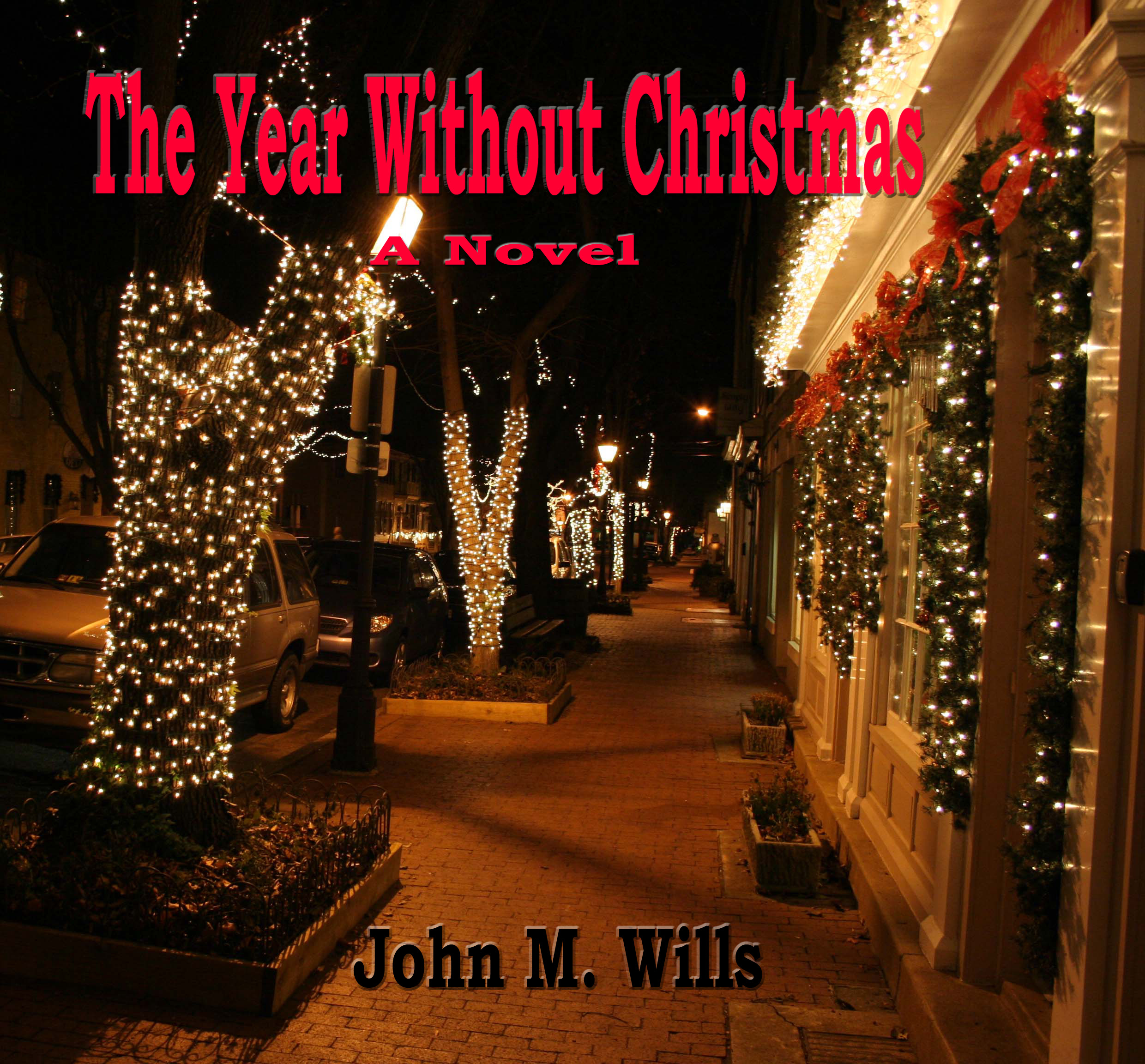
John's yet to be released novel.
John’s yet to be released novel.

What a wonderful conference I just attended! My writing network continues to expand, as I met several new members to our organization: the Public Safety Writers Association. One couldn’t help but improve their writing after all of the excellent presentations and panels. Truly a worthwhile event.

I was blessed to have won multiple awards for my submissions to the writing competition. However, what pleases me most is that my next book, The Year Without Christmas: A Novel, won an award. It is set to be released in October, and tells the story of a family’s struggle to recover from a tragic accident. Two prevalent problems surfacing in our society today–PTSD and homelessness–themselves become characters in this compelling read. Watch my blog for further details.