ADs For GOD

Author Tony Vanderwarker explains “How To Write a Novel About Advertising.”Z

How do you write an interesting novel about a superficial, silly business filled with shallow, greedy, backstabbing characters, without the book taking on those very characteristics?

Don’t get me wrong. The ad biz was very, very good to me. I made lots of money and had some great times. But it was insane. Because it attracted a lot of crazy artist types and then set them on a collision course with hard-bitten business people. So you had the intersection of commerce and art both with different goals and standards. One determined to make money, the other to entertain and entice. Inevitably, conflict occurred between the two with clients saying, “That ad won’t sell.” And creative people arguing back, “Yes, it will, it’s terrific, people will love it.”

Standoffs result and that’s where the “suits” come in to referee. Suits are account people who browbeat the creatives to modify their ads then softsoap the clients to get them to buy the “fixed” ads.  It’s advertising’s version of sausage-making, a messy process with noses out of joint, patched together ads and time and money wasted.

GetAttachmentAfter retiring from advertising and spending six years writing with three unpublished novels wasting away on the far reaches of my hard drive, I decided to take on advertising.

But how to capture this chaos in a novel? Mad Men did it by going back to a Fifties perspective when men were men, women were women and everyone kept their clothes on until drinks were served.

I didn’t want to warm up another Mad Men, nor did I want to rehash my own experiences, as crazy/funny as some of them were. I broke my pick on it many times until I finally found the sweet spot.

I have the ultimate client, God, come down to earth and select a broken-down ad guy on the last legs of his career to come up with a campaign to strengthen God’s market share.

Dinny Rein, a Chicago creative director barely holding on to two lousy accounts, is in the crosshairs of the top creative director and the president of the agency.

He keeps getting crank calls on his cell from some guy who’s looking for someone to do an ad campaign. Rein writes him off as a nut until $10,000,000 shows up in the agency’s new business account and Rein wakes up one day with a complete physical makeover that finally convinces him that his new client is God.

God needs an campaign to increase his lagging church attendance, as God explains, “My comparables—been down four quarters in a row. I’ve been up nice each year for the past ten, but damn Mohammed’s been off the charts, double digits with practically no marketing.”

Dinny goes to work on a campaign but soon collides with agency politics as Ester, his boss, and Steve Sinkle, the president, want to put their stamp on the huge new account and edge Dinny out.

He does a knockout campaign of feel-good commercials which God loves, saying to Dinny, “I tell you, the way you captured my magnificence and grace, the majesty of my works—takes me back to the old days when people used to lie on their backs on scaffolds painting pictures of me on the ceiling.”

But Sinkle and Ester are conspiring behind the scenes to do a competitive campaign based on promotions, coupons and giveaways to get people into church.

Forced by Sinkle to have his client appear as a person, Dinny chooses the Polish building superintendent Woogie Strepijichowski. Sinkle and Ester do a full-court press on Woogie to promote their campaign and Woogie succumbs to their blandishments.

Dinny is beginning to realize that Woogie is the client from hell, snagging wire transfers out of the air and stealing money from drug lords to finance the advertising, as well as playing agency politics, Dinny watches as his rivals swing God around to their campaign and get it into a test market.

When the promotional campaign packs the churches, Dinny realizes he’s been aced out. Sinkle, Ester and Woogie turn on Dinny and fire him.

He’s disconsolately strolling around Chicago when he sees Sinkle and his cohorts, including Ester, being paraded out of their building by the FBI in handcuffs. Turns out they’ve been evading taxes big-time.

Dinny’s elated but he’s still without a job until he gets a call from another mystery caller. Turns out its Buddha and guess what? He wants to talk with Dinny about doing an ad campaign.

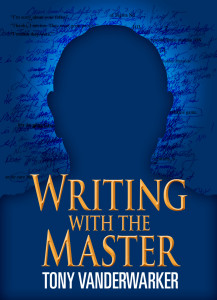
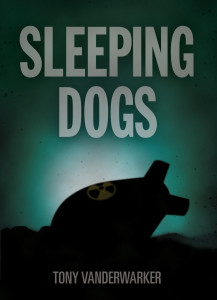
Thanks, Tony, for sharing with my readers about how you came to write ADs For GOD. Your other books can be found on your website, http://tonyvanderwarker.com/, and are available on Amazon as well.
2Q==

writing-with-the-master-tony-vanderwarker-217x300sleepingdogs4-217x300

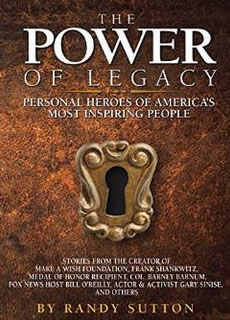
The Power Of Legacy by Randy Sutton

The Power Of Legacy by Randy Sutton is a compelling inspirational anthology that will invigorate one’s soul. Randy’s book is a collection of stories about people who, for the most part, aren’t household names. The vignettes of their lives and deeds, however, make them more important and powerful than any Hollywood actor could ever dream of being.book-cover-the-power-of-legacy

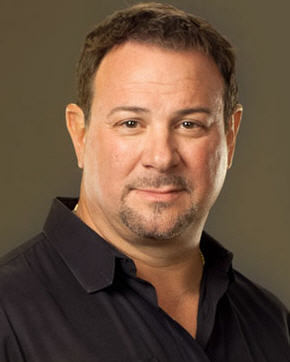
Randy Sutton’s story is itself one that is nothing short of amazing. He distinguished himself as one of the highest decorated police officers in the history of the Las Vegas Metropolitan Police Department. But Randy’s service wasn’t only limited to fighting crime. He earned a Presidential Point of Light Award from President George Bush for his creation of a reading program for inner city children. Additionally, Randy is an actor and author of several popular police anthologies.

In The Power Of Legacy, the author explains that “legacy” is what people leave behind and pass on to others. The term is most often associated with success, which in the present day seems to equate to notoriety and/or riches. However, Sutton would argue that one’s legacy is something intangible—a quality or moment that lasts forever.

In his book, the author introduces the reader to a collection of people who have had a huge impact on society, but for the most part eschew the spotlight. Case in point—Frank Shankwitz, who created a global phenomenon known as The Make-A-Wish foundation. Frank was a motorcycle cop in Arizona who granted a seven-year-old boy’s wish to become a highway patrol motorcycle officer like the stars of the old TV show, CHiPs. That experience was so satisfying that Frank wondered, “Why can’t we do that for all the children? Have them make a wish and then make it happen?”

In March of 1981, Frank wondered no longer. He began collecting donations and gathering the right people to address the wishes of children suffering from life-threatening diseases and conditions. He eventually persuaded companies like Disney to get on board with his dream, and since its inception, Make-A-Wish has granted the wishes of more than 300,000 children around the world.

Others profiled in the book that have left a legacy include actor, Gary Sinise, a staunch supporter and advocate for our nation’s servicemen and women. Also, Father Joe Carroll, who as a Catholic priest works tirelessly for innumerable homeless folks to restore their needs and dignity. Then there’s Sandy Heverly, a woman whose family was decimated by a drunk driver whose punishment amounted to a mere fine of $100.00. Her outrage and love for her departed family members caused her to launch a crusade to change the law.

Randy-SuttonThese are but a few of the heart–warming stories in The Power Of Legacy. Each one carries its own message of hope and love, and each tale will restore or reinforce one’s faith. The book concludes with Randy’s own story of what prompted him to embark on this journey—a powerful message indeed. His book is one meant to be read more than once, for the inspiration it imbues is refreshing and much needed in our hedonistic, social media frenzied society. Hopefully, after reading Randy’s collection the reader will ponder his own legacy and perhaps try to change the world.

Is Cursive Cursed?

A recent ABC News report suggested that cursive handwriting is becoming increasingly irrelevant. Students rarely use or practice this once standard form of communication. In fact, one high school principal suggested that cursive may become a skill students must learn outside of the classroom because schools are focused on “real-world” job related skills involving technology.Old letter

Even signatures, as important as they are, may not necessarily have to be in the form of cursive. A sales manager at a credit union opined that the lack of a cursive signature isn’t necessarily a deal breaker. The individual’s mark may simply be a dot or an X, and it can be captured electronically.

However, not everyone is willing to abandon this basic building block of education. Lawmakers in Concord, N.H. passed a bill requiring public schools to continue teaching cursive. The bill’s sponsor advised teaching cursive will allow students the ability to read historical documents, such as those created by our founding fathers.

“It’s the last form of personalized communication,” said Neal S. Frank, owner of Santa Fe Pens in New Mexico.With passion and self-interest, Frank is teaming up with local calligraphy and cursive teacher Sherry Bishop to revive the art of good penmanship.

“It is self-expression,” agrees Bishop, who teaches at one of the few local schools that still requires learning cursive, the Santa Fe Waldorf School. “We can’t get much closer to the heart than true handwriting.”

For Frank and Bishop, cursive is about more than good penmanship.“There’s been a couple of studies that show learning cursive triggers the brain on how to learn,” says Frank, adding that “there may be a correlation between not learning cursive and the fact that we [the US] are falling behind the rest of the world.”

Bishop adds that practicing cursive and handwriting improves fine motor skills and head-heart-hands coordination.“It’s this beautiful mediation, and there’s this rhythm that gets the body in sync,” she says. “It’s just me and the person I’m sending the letter to–it’s just this beautiful, private conversation.”

I don’t know about you, but when something wonderful, or perhaps sad, occurs in my life, and someone sends me a handwritten note, there’s no better feeling. It’s much better than a commercially produced card with some stranger’s sentiments printed inside. The personalization and concern conveyed by a handwritten card is something to be treasured for a lifetime.

I encourage my family to communicate using cursive whenever they can. It’s a beautiful form of expression that should not be pushed aside for the sake of technology.

Do You Write Simply?

Have you ever wondered about your writing? Is it too formal, overly descriptive, or perhaps, too simple? You can analyze your writing by using the Flesch-Kincaid readability test, which indicates comprehension difficulty when reading a passage of contemporary academic English. Be prepared for a surprise if your writing scores high, it means it’s easily understood by an average 11-year-old student. What? Yes, a high score indicates easy readability.o-JUDGED-FOR-READING-facebook

Should you be embarrassed if your writing is geared toward high school students’ comprehension levels? Consider this: Ernest Hemingway, an icon of American literature, wrote The Old Man and the Sea at a fourth grade reading level. So the takeaway is simple writing is a good thing. It encourages reading and allows readers to comprehend and retain our stories more reliably.

For a more in-depth look at this subject, read this article: Why History’s Best Writers Wrote for Middle Schoolers. And to find out about your writing’s readability, use this free reading calculator: Readability-Score.com. Now, get to it!

Which Book Genres Earn The Most Money?

When planning to write a novel, advice comes from many sources—friends, fellow writers, and of course, one’s own research. Sage advice often stresses, “Write what you know.” That’s sound advice for sure, but if your motivation to write is to have many people buy and read your work, you must know what people are reading. Below are the top five book genres earning the most money. The figures are based on leading authors’ earnings and industry trends as researched by the money-and-books-on-balance-scaleRomance Writers of America Association.

#1 Romance / Erotica ($1.44 billion)

Fifty Shades of Grey pushed author E.L. James to a net worth of $60 million, while Danielle Steel claims to be worth $610 million. All that wealth comes from formulaic romance novels that feature similar story-lines and endings.

#2 Crime / Mystery ($728.2 million)

Many of these novels come in sagas and trilogies featuring the same protagonist. Readers are fascinated by stories of murder and violence, and in fact, true crime stories are the most popular.

#3 Religious / Inspirational ($720 million)

No surprise here that the ultimate bestseller has always been the Bible. But many readers want answers to life’s problems and want to feel good about themselves and their fellow-man. Wholesome stories of redemption and reward continue to be popular.

#4 Science Fiction and Fantasy ($590.2 million)

Lord of the Rings and The Hunger Games—tremendous bestsellers and movies. These tales draw both young adult and adult audiences. The fact that the stories are continuing sagas make them lasting and appealing.

#5 Horror ($79.6 million)

Some folks enjoy being scared. Storytellers Stephen King and Dean Koontz have popularized this genre, and have had their most popular novels hit the big screen.

After reading the above astounding figures, the rest of us need a dose of reality. The Guardian, a British newspaper, advises that most writers earn less than $1,000.00 per month. Hardly a living wage. Who knows the reason(s) why some succeed while others do not? However, there is a bright side to the book industry. Now that ebooks have become increasingly popular, self-published authors now account for 20% of sales in the genre market. Moreover, even if your expertise or interest falls outside of the five most profitable genres, isn’t it worth the effort to try one? Why not write a romance novel or mystery? Sometimes writing beyond one’s comfort zone results in success. Besides, what do you have to lose?