Kindle Now Pays For Pages Read

As you know, July 1st began the KENPC (Kindle Edition Normalized Page Count), a formula by which KDP (Kindle Direct Publishing) Select Books will be paid for the number of pages read, rather than just the sale of the book. The payments vary, obviously, if the customer reads only a few chapters versus the entire book.kindle

The July 2015 numbers are in—Amazon KDP is paying $0.005779 per page read. The new payout seems to favor longer books if you compare the new payout to the old. However, if you remember when you wondered how long your book should be, it turns out that the new system doesn’t really favor longer books. You will receive the same payment whether you write a 300 page single book or 6 books. The key to getting the most money for your work is whether the readers are interested in your book. If they are, they will read more pages, thus the author receives more money.

What’s the takeaway? Expect to receive $0.0058 per page read. We are entering a new era of royalties.

The Art of Writing Short Stories

Although I’ve written plenty of books, I enjoy reading and writing short stories. And not to brag but, some of my stories haveresume-writer-edit won awards and been published. So what’s the key? How does one create a short story that readers will enjoy and remember?

Kurt Vonnegut offers some advice to aspiring short story creators. He advises not to waste the time of a total stranger by writing a weak story; give the reader at least one character he can root for; and every character should want something, even if it’s only a glass of water.

Dialogue must be such that it’s provocative and interesting. Remember, it’s a short story so every word is important. A character has to almost jump off the page with his words, the dialogue can’t be mundane or ordinary. Speaking of characters, don’t simply describe their physical appearance. Instead, tell your reader about their values, lifestyle, fears, etc. Describing eye or hair color doesn’t make a character familiar or likable. While your at it, tell us about their bad side as well. Show us how they live, have them driving, walking, shopping, interacting with family or friends. In other words, characters cannot be static.

Choose strong words when writing short stories and avoid using unnecessary words–they weaken your story. Don’t dwell on the past with a ton of background information. Get right to the point and the action. Your first sentence should be a grabber and possibly the best sentence in your story.

Finally, end with a bang. Leave no doubt that your story is over. Surprise, disappoint, excite, whatever, but your story should have a glorious ending. And if your beginning sentence wasn’t the best, then the last one should take that honor.

What’s left? Sit down and write!

Weepers: A Novel by Nick Chiarkas

Tell us about Nick Chiarkas. Where did you grow up, your family, career, etc.?

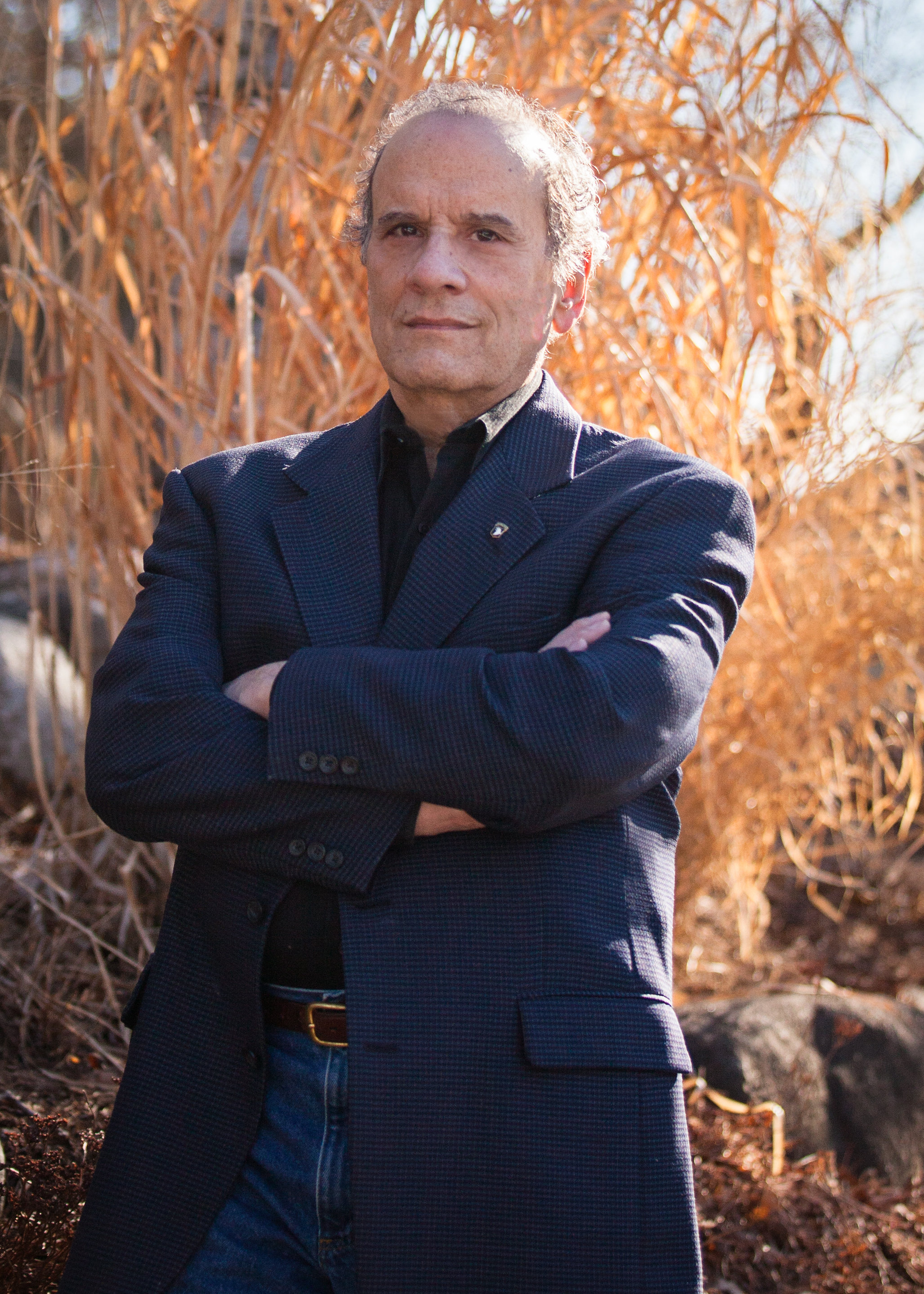
I grew up in the Al Smith housing projects in the Two Bridges neighborhood on Manhattan’s Lower East Side, where Weepers takes place. When I was in the fourth grade my mother was told by the principal of PS-1 that, “Nick is unlikely ever to complete high school, so you must steer him toward a simple and secure vocation.”  Instead, I became a writer, with a few stops along the way: a New York City Police Officer; the Deputy Chief Counsel for the President’s Commission on Organized Crime; and the Director of the Wisconsin State Public Defender Agency. On the way I picked up a Doctorate from Columbia University; a Law Degree from Temple University; and was a Pickett Fellow at Harvard. How many mothers are told their child is hopeless? How many kids with potential surrender to desperation? That’s why I wrote Weepers—for them.Chiarkas2015-7

Do you live in New York; do you have any hobbies? What do you do to relax?

I live in Middleton (a suburb of Madison), Wisconsin, with my wife (Judy) my youngest son (Josh) my dog (Mac) and cat (Mollie). Besides writing, I enjoy reading, painting (oils and watercolor), woodworking, and the sweetness of doing nothing whenever I can.

Your novel, Weepers, takes place in the NYC projects back in the 1950s. Was it difficult to write in that period, and what did you do to ensure you used the correct terminology and events?

In 1957, I was a kid living in those projects in that neighborhood. Nevertheless, I could not rely just on memory, so I did a ton of research. Everything from popular names to popular toys, period maps of the area, floor plans of apartments, news stories from NY Times archives, period magazines, lots of time in libraries and online. I went back to the neighborhood to walk the streets and calculate distance – in short a lot more time was spent on research than on the actual writing of my first edited draft. Along with the research was the creation of a complete backstory for each character and all events before and during my writing of Weepers. It was hard work and great fun.

Your protagonist, Angelo, is a youngster wise for his age and who experienced things a normal child would not have. Was this character a figment of your imagination, or was he based on an actual person?

In many ways, Angelo is based on me and my imagination. When I first started to write Weepers Angelo’s name was Nicky (me) however, I quickly found that Nicky was never doing anything crazy or bad, he was altogether boring. So I changed his name to Angelo and gave Nicky a minor role in Angelo’s gang. I still felt a bit protective of Nicky, so I changed Nicky’s name to Spiro and was free of that responsibility and limitation.

When did you decide to become a writer, and have you had any formal training?

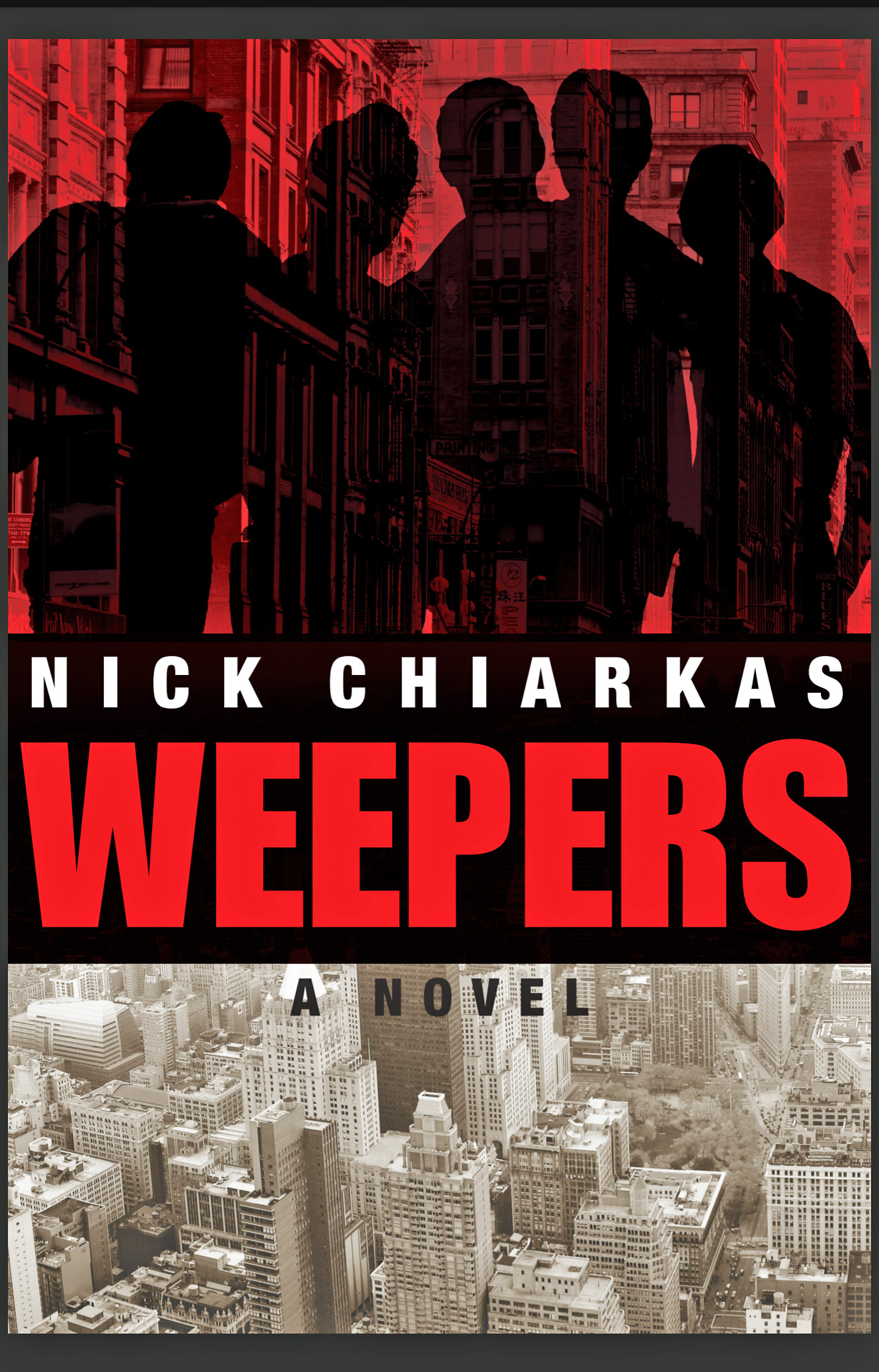
WEEPERS COVERAs long as I can remember I loved poetry (reading and writing it), but I became serious about writing when I was a police officer with NYPD. I remember thinking it might be interesting to write something based on the conversations from the back seat of a police car. In the late 1960’s my partner and I responded to a killing on a subway platform. We transported two witnesses – both were men in their late 40s who lived in the abandoned subway tunnels – to our precinct for a statement. The men sat in the back of our police car and talked to each other about going down within the tunnels. (Note: there are 4 levels of tunnels the further down you go to live the less likely you will ever return to the surface – these two men just moved to the 2nd level but were still coming up). One man told the other that he snuck down below the 4th (lowest) level through a secret stairway. He said, “I went down all thirty feet below, and I heard some talking.” “Did you see them?” the other asked. “No, you know what happens if you look at them.” Both guys nodded. “What did they say?” “They were just talking over breakfast nothing really scary. One said he was there when God made everything, He just waved his magic wand…it was the best trick I ever saw.” My partner and I would just smile from time to time, but I was jotting down notes. Finally I asked, “So, what’s 30 feet below the fourth level?” They said, “Hell.” I kept the notes, wanting to write something (poem, short story, something) about this. I, of course, do not believe what those guys said in the back of our car. But, no doubt, they believed it. I wrote a poem titled Thirty Below. I also continued to take notes over the years writing poems and short stories. Finally after writing a few law books I decided to tackle a novel, Weepers.


Weepers is an engrossing tale that immediately draws the reader in. It seems you had an emotional investment in telling this tale. How long did it take to complete the story?

First, thank you so much for your kind words. And second, you are correct this was an emotional heart-driven story that insisted on being written. How long did it take? Counting research and more drafts than I can recall, it took eleven years. The first seven were when I had a day job, and the last four were more concentrated. I would wake up an hour early, make a cup of coffee or tea, and write. I stuck to Anne Lamott’s brilliant – Bird by Bird – advice and wrote at least one-inch every day. I am presently writing a sequel that my publisher wants it in 12 to 18 months. So, this will have to be a different – but every day – process.

Do you write anything else other than novels?

Yes, I love writing poetry.

And I have written non-fiction including:

Books:

  • Wisconsin Criminal Practice and Procedure (Vol. 9, 1996, West)
  • Ethical Problems Facing the Criminal Defense Lawyer – Practical Answers to Tough Questions (1995, ABA)
  • Alabama Criminal Trial Practice, 2nd Edition (1988, Harrison now West)
  • Alabama Criminal Trial Practice Forms, 2nd Edition (1988, Harrison now West)
  • Criminal Offenses and Defenses in Alabama (1983, Harrison now West)
  • Alabama Criminal Trial Practice, First Edition (1981, Harrison now West)
  • Alabama Criminal Trial Practice Forms, First Edition (1980, Harrison now West)

Directed the research, writing and completion of the following books published by the U.S. Government in 1986:

  • The Impact: Organized Crime Today
  • The Edge: Organized Crime, Business, and Labor Unions
  • America’s Habit: Drug Abuse, Drug Trafficking, and Organized Crime

What is your next project(s)?

Although Weepers stands on its own, it is also the start of a series. I am presently writing Nunzio’s Way, which will be followed by Black Tiger Tea and then Blue Bounty. I know the story that far, but don’t know, at this point, if there will be more to tell beyond that fourth book or if I will go in a different direction.

Is there anything else you’d like my readers to know about Nick Chiarkas or Weepers?

So family, friends – people that know me well describe me as a stand-up guy and a good friend.

  1. I dislike bullies.
  2. I dislike mean people.
  3. Weepers draws from my memory and my heart.
  4. I raised my two oldest children mostly as a single dad – just the three of us. They taught me a lot.
  5. The more I listen to politicians, news broadcasters and talking heads the more I like dogs.

Five Fun Facts not in my Bio:

  1. I was one of a handful of NYPD cops sent to Woodstock in 1969 to provide security – it was incredible.
  2. While in an Army hospital I received a very kind letter from J.D. Salinger.
  3. I was in the movie The Anderson Tapes (Starring: Sean Connery, Dyan Cannon, and Christopher Walken).
  4. I grew up in the Al Smith projects where Weepers takes place.
  5. As a kid, I was in a gang and was an Eagle Scout.

Thank you for a great interview, Nick. Readers can learn more about Nick and his work at his website: http://nickchiarkas.com/ 


What type of edit do I need?

OLYMPUS DIGITAL CAMERA

You need an editor, but what type of edit are you seeking? There’s a lack of knowledge about editing , particularly among new writers, and it can have a huge impact on your work. Let me give you an overview of the different types of edits, just in case you are considering having someone go over your manuscript or other piece of writing.

Copy editing

This covers the basics, to include spelling, typos, punctuation, and grammar. It may also cover word usage, style, and jargon. A good editor can usually accomplish this task within three business days. Sometimes, copy editing is referred to as proofreading.

Line editing

This form checks for sentence clarity, overuse of adverbs and adjectives, run-on sentences, opening words of paragraphs and sentences. Line editing also checks consistency of chapter titles, names, titles, etc. Your manuscript is examined line by line, and line editing is the most common editing request.

Substantive editing

This editing is the most exhaustive examination of your manuscript. It will include rewriting, moving blocks of text from one section to another, looking at structure, logical consistency, and organization. This form also looks at POV, plot, and readability. Since changes may sometimes be major, turnaround times are negotiable, and generally, one revision is included at no extra charge.

Meet Author S. Kelley Chambers

Hi, Kelley. I know you well but my readers do not, so please, introduce yourself and tell everyone about your writing journey.

Sure, John.I am Kelley, wife and mother of four. I was born and raised in South Carolina, but I have lived in the Washington Metropolitan area for nearly 30 years, so I claim myself a native Washingtonian.I enjoy reading, writing, riding my bicycle, singing, decorating and browsing thrift stores nationwide (one man’s trash is another man’s treasure).
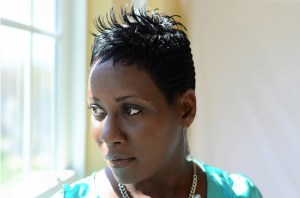
cache_884921851I began writing as a way of journaling pent up emotions. I was experiencing so many outrageous and unbelievable confrontations with my rebellious and out of control pre-teens and teenagers, I began keeping a journal of how I felt (my emotions) about their rebellious behavior and what extreme measures of punishment I used to quickly correct their actions and teach them accountability.

Do you write every day, and what else do you write?

Actually, I do write every day, but not any particular type of genre though. I keep notepads and pens with me and when memories or ideas come into my head, I jot them down. This does lead to several pads lying around the house with notes scribbled throughout, but, it all comes together when I sit down and start collecting and putting the pieces together, like a puzzle.

I write a particular form of poetry that I call, “Performance Poetry.” It’s my own personal spin on bringing poetry to life and making the words jump off the paper by impacting the audience/listeners in a powerful and interactive way.

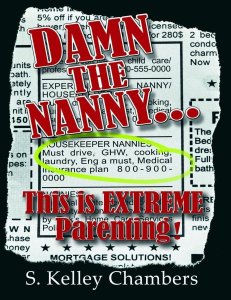
Tell my readers about your new book, Damn the Nanny… this is EXTREME Parenting!

The book honestly expresses the power-struggles and love-hate relationships between parents and adolescents that many parents are reluctant to talk about. It unveils the crying, frustration, sleepless nights, yelling and often times the emotional low a parent experiences when the law has to get involved. It soothes many of the confrontational episodes with humorous anecdotes and startling behavior modification or what I call, extreme disciplinary methods.I believe the highs and lows throughout the book will reach out to many parents that may be experiencing similar “out of control” teenage behaviors in their families.damn the nanny cover
Do you have any favorite authors, or any that inspire you?

Oh my, there are so many authors and genres that it would take up too much paper to list them all.I love biographies and memoirs. I love sci-fi, fictional biography, and horror (yep, I enjoy being scared out of my wits at bedtime). 

Some of my favorite authors have had best seller’s and reached celebrity status like; Toni Morrison, Alice Walker, Amy Tan, Stephen King, Ernest Gaines, David Pelzer, Iyanla Vanzant, Jeannette Walls, Cupcake Brown and Jamaica Kincaid. Some of my favorites have gone on to their resting places like; Zora Neale Hurston, Maya Angelou, Sidney Sheldon and Alec Baldwin. And by the way, I have a close relationship with some amazing local authors like; John Wills and Tracy Deitz.

What is your most rewarding writing experience?

Whenever a reader gives me honest and deeply passionate reviews or critiques, verbally or written, about their experiences in comparison to the book, I feel a strong connection to them. I feel empathy toward whatever they are going through and I feel I am making my story-their story.

Where and when do you write? Do you create a certain environment for writing, e.g., certain music playing, favorite chair, etc.?

As I stated earlier, I keep pens and pad with me at all times. Whenever a worthy thought, memory or idea comes to me, I jot it down. I usually end up with numerous pads and lots of scattered notes, but when I sit down to write, I draw off of those notes and add stories to them.I do listen to the radio a lot, but, when I am writing, I can only listen to Contemporary Christian music because it soothes my mind. Furthermore, if I listened to Acoustic Coffee House, Oldies, Folk, or Indie Folk, I would never get anything done because I would be too busy singing along with the artist/group.I can write anywhere I go; on a train, bus, traveling, at a restaurant, in bed, in the bathroom, at an amusement park, or at church. Wherever there is paper and pens, I can write.

Are you working on any new projects?

Yes. I am in the process of working on a project revealing Satan’s plan to entice, ensnare and destroy the institution of marriage as it is outlined in Genesis (a hidden 10-Step process).

 Do you have any events planned for the book release?

At the present time I do not have any major events planned. The Ebook can be purchased online through my website: www.skchambers.com or at www.amazon.com  I will be attending book festivals and writing groups and selling the book:

Saturday, June 20, 2015

*Harrisonburg-Rockingham African-American Festival in Harrisonburg, VA

Friday, September 18, 2015 – Saturday, September 19, 2015

*Black Writer and Book Clubs Festival, Memphis, TN

Thursday, November 5, 2015 – Friday, November 6, 2015

Mt. Zion Cathedral Women’s Conference, Fredericksburg, VA

Monday nights 7:00-9:00 pm

Books a Million, Fredericksburg, VA

Thanks for sharing your writing journey with all of us. I know your book is presently available on Kindle, but the paperback version is due out in days. Having read the book myself I know it will be enjoyed by many. Please keep us informed on future works by S. Kelley Chambers.